Čeština
 English

- New




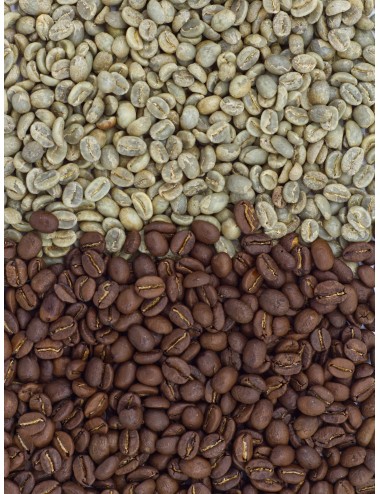
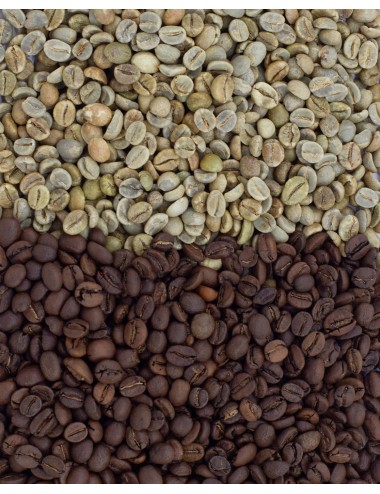
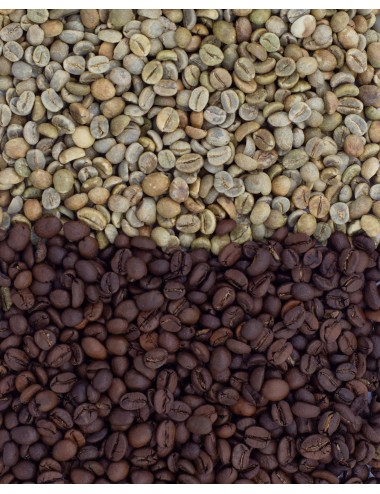
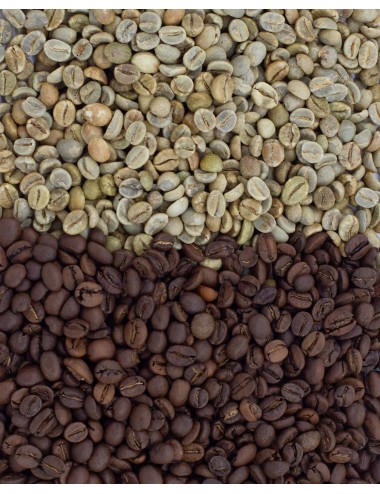
KENYA AA – Coffee beans
Kenyan coffees tend to be highly acidic, juicy, and often quite "lively," so they frequently benefit from a longer resting period after roasting—around 2–3 weeks is often ideal. A slightly longer extraction helps round out the acidity while enhancing sweetness and body. Freshly roasted, a Kenyan coffee can be sharp, unsettled, and somewhat "biting," whereas after resting, the flavors often harmonize, the acidity becomes more refined, and the sweetness stands out more; a longer extraction can help transform the cup from merely "sour" into something juicy, sweet, and complex.
Kenya is to the coffee world what Burgundy is to wine—the absolute pinnacle, possessing an unmistakable character. While neighboring Ethiopia is the birthplace of coffee, Kenya has elevated its production to a science. The local auction system, rigorous grading, and government quality control have created one of the most sophisticated coffee industries in the world. Coffee production contributes significantly to Kenya's economy. The sector is known for its cooperative system, which encompasses cultivation, processing, milling, marketing, and auction sales. Approximately 70% of Kenyan coffee comes from smallholder farms, which manage about 75% of the land used for cultivation. Estimates from 2012 indicated there were around 150,000 coffee growers in Kenya. Other sources state that 6 million Kenyans are employed—either directly or indirectly—in the coffee industry.
The acidic soil of the central Kenyan highlands, combined with optimal levels of sunlight and rainfall, creates excellent conditions for growing coffee. However, due to the expansion of real estate development in growing regions and price instability, production in this Great Lakes nation fell from approximately 130,000 tonnes in the 1987/1988 season to 40,000 tonnes in the 2011/2012 season.
Kenya primarily produces Arabica coffee. Kenyan coffee falls into the "Colombia Mild" category and is renowned for its intense flavor, full body, and pleasant aroma with notes of cocoa; high-quality Kenyan coffee is among the most sought-after in the world.
Despite the proximity to Ethiopia (widely believed to be the region where coffee originated), one source states that coffee was not cultivated in Kenya until 1893, when French Holy Ghost Fathers brought coffee plants from the island of Réunion. Mission farms near Nairobi served as the nucleus around which coffee cultivation in Kenya developed. Another source indicates that the British introduced coffee cultivation around 1900. In 1933, the Coffee Act was passed, establishing the Coffee Board of Kenya and shifting coffee sales back to Kenya. In the early 1950s, an agricultural act was adopted with the aim of creating family-run enterprises that combined subsistence farming with the production of cash crops for additional income; this act was known as the Swynnerton Plan.
100% arabica
Processing method: washed
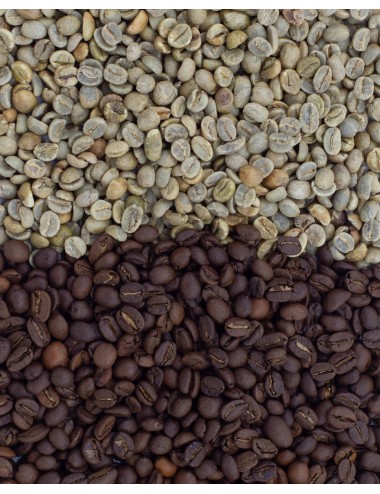
Roast: Medium (espresso)